

The hunt for global capital is no longer happening quietly behind closed doors. For Nigeria’s central bank, it has become an open, deliberate campaign built on discipline, transparency and the promise that policy uncertainty is no longer the country’s defining feature.
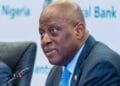
That was the message the Central Bank of Nigeria (CBN) carried to Washington, DC, as it stepped up efforts to reposition Africa’s largest economy as a credible, rules-based destination for long-term investment. Under Governor Olayemi Cardoso, the bank is no longer merely defending reforms at home; it is exporting Nigeria’s economic reset directly to global capital markets.
At a time when international investors are increasingly selective, Nigeria is signalling that it understands the new rules of engagement: credibility matters more than slogans, predictability matters more than promises, and painful reforms are often the price of sustainable confidence.
ALSO: Inside Nigeria’s Banking Recapitalisation Drive: Winners, Late Movers and M&A Signals
Cardoso’s engagement with global investors at the US–Nigeria Executive Business Roundtable in Washington was therefore more than a routine roadshow. Convened by the US Chamber of Commerce’s US-Africa Business Center, the forum brought together senior US corporate executives, institutional investors and policy influencers at a pivotal moment in Nigeria’s economic recalibration. The message was carefully calibrated: Nigeria is serious about macroeconomic stability, transparent markets and policy anchored in rules, not discretion.
In global finance, capital does not move by accident. It follows clarity, discipline and credibility earned over time. Nigeria’s renewed pitch, Cardoso argued, is anchored on precisely those pillars. Addressing investors, he framed the country’s reform narrative as a decisive shift away from ambiguity toward institutional strength placing rules above personalities and long-term stability above short-term political comfort.
He reassured investors that Nigeria is firmly committed to macroeconomic stability and predictable policy frameworks, stressing that reforms underway are designed to restore confidence in an increasingly volatile global environment. The focus, he said, is on building a stable macroeconomic foundation capable of supporting sustainable, private-sector-led growth not quick fixes that unravel under pressure.
Central to that message was foreign exchange reform. Cardoso told the gathering that recent changes in the FX market have improved transparency and price discovery, reducing distortions that had long discouraged capital inflows. The return to orthodox monetary policy, he added, is helping to anchor expectations and contain macroeconomic risks. He also pointed to the modernisation of Nigeria’s payments system as a critical pillar of the investment case, noting that efficient, secure and inclusive payments infrastructure underpins business growth, innovation and financial inclusion.
The roundtable gave Nigerian policymakers a rare opportunity to engage investors directly on opportunities across infrastructure, energy, financial services, agriculture and technology while confronting long-standing concerns around policy consistency and execution. Discussions centred on macroeconomic stabilisation, regulatory clarity and how to scale bankable projects across priority sectors of the economy.
Kendra Gaither, President of the US-Africa Business Center, captured the mood succinctly. “What investors are responding to today is clarity; clear rules, credible reforms and seriousness of purpose,” she said. “Nigeria’s message is increasingly one of discipline and opportunity, and that matters in a global economy actively searching for stability and predictability.”
The confidence Cardoso projected in Washington did not emerge overnight. It rests on a series of bold and often controversial reforms that marked the starting point of Nigeria’s current economic reset. In 2023, the new administration, working with the CBN, liberalised the foreign exchange market, ended central bank financing of fiscal deficits, and dismantled fuel subsidies that had long distorted public finances. Revenue mobilisation was strengthened, while monetary tightening sought to rein in inflationary pressures.
Since then, Nigeria’s external position has improved markedly. Foreign exchange liquidity through official channels has increased, international reserves have risen, and the country has returned to international capital markets. Rating agencies have responded by upgrading Nigeria’s outlook, while the start-up of a major domestic private refinery is pushing the country up the value chain in a fully deregulated downstream oil market.
CBN currency reforms, in particular, have reduced the need for heavy-handed interventions and encouraged renewed investment inflows. The unification of exchange rates and the clearance of over $7 billion in FX backlog significantly improved investor confidence. Multilateral institutions, including the World Bank, described the moves as bold interventions capable of improving Nigeria’s long-term economic sustainability.
Perhaps the clearest validation has come from Nigeria’s risk indicators. The country’s sovereign risk spread has fallen to its lowest level since January 2020, erasing the premium accumulated during the pandemic and subsequent economic stress. These are not abstract statistics; they directly influence how global investors price Nigerian assets and decide whether to commit long-term capital.
At home, the CBN has paired external engagement with deeper policy communication. The recently hosted Monetary Policy Forum 2025, themed “Managing the Disinflation Process,” brought together fiscal authorities, lawmakers, private sector leaders, development partners and scholars. The aim was to strengthen monetary policy communication, foster coordination and build consensus around the difficult trade-offs required to stabilise prices.
At the forum, Cardoso reaffirmed that price stability remains the apex bank’s overriding mandate. He outlined plans for a gradual transition to an inflation-targeting framework and strategies to restore purchasing power and ease economic hardship. The CBN, he said, remains committed to a disciplined, forward-looking and adaptive monetary stance capable of responding to persistent shocks.
“Managing disinflation amidst persistent shocks requires not only robust policies but also coordination between fiscal and monetary authorities to anchor expectations and maintain investor confidence,” Cardoso said. “Our focus must remain on price stability, the planned transition to inflation targeting, and strategies to restore purchasing power.”
He was equally direct about the philosophical shift underway. “As we move from unorthodox to orthodox monetary policy, the CBN remains committed to restoring confidence, strengthening policy credibility and staying focused on its core mandate,” he said.
Discipline, however, does not mean rigidity. Cardoso acknowledged that policy must remain responsive to changing conditions. Recent monetary easing, he explained, followed careful assessment of improving inflation trends and macroeconomic indicators. “The decision to lower the policy rate was predicated on sustained disinflation over the past five months and the need to support economic recovery,” he noted.
Beyond monetary policy, the CBN has moved to strengthen the financial system itself. New minimum capital requirements for banks, effective March 2026, are designed to build resilience and position Nigeria’s banking sector to support a $1 trillion economy. The recapitalisation drive sends a clear signal: banks must be strong enough to absorb shocks and finance large-scale transformation.
Global investors appear to be taking note. Interest in Nigerian assets has surged as financial sector reforms ripple through the economy. The clearest signal came with Nigeria’s $2.25 billion dual-tranche Eurobond issuance one of the strongest outings in the country’s history.
The bonds, maturing in 2036 and 2046, attracted orders exceeding $13 billion, the largest orderbook Nigeria has ever recorded. The 10-year $1.25 billion bond was priced at 8.63 percent, while the 20-year $1.10 billion tranche carried a coupon of 9.13 percent. Demand came from investors across the UK, North America, Europe, Asia and the Middle East.
Finance Minister Wale Edun described the outcome as a powerful signal of renewed confidence in Nigeria’s reform trajectory. Debt Management Office Director-General Patience Oniha highlighted the diversity of investors ranging from pension funds and insurers to hedge funds and banks, underscoring Nigeria’s broadening investor base.
Even before the bond sale, sentiment had begun to shift. Emre Akcakmak of East Capital observed that “Nigeria appears to be back in business as long-awaited economic reforms take shape,” pointing to improved FX liquidity, profit repatriation and naira stability. Standard Chartered’s Samir Gadio similarly noted that portfolio inflows are being supported by better FX market functioning and reduced volatility.
Markets have largely validated those assessments. The naira has stabilised, while external reserves climbed to a seven-year high of $46.07 billion following the Eurobond issuance levels last seen in 2018.
For analysts, the message is consistent. Painful reforms such as fuel subsidy removal, FX adjustment and tighter monetary policy have improved fiscal transparency and market confidence, even as they raise new risks around debt and currency exposure. Sustaining gains, they caution, will require discipline and consistency.
Taken together, the signals are unmistakable. Nigeria’s economic narrative is being rewritten around credibility, rules and long-term thinking. By taking that story directly to global investors and backing it with concrete reforms at home, the Central Bank of Nigeria is repositioning the country for sustained capital inflows and renewed market confidence.
The challenge now is endurance. In global finance, credibility is not a one-off achievement. It must be defended every day.







Comments 1